
Art Engagé: When Creativity Becomes a Voice
Art engagé—socially engaged art
This blog post explores the meaning of art engagé—socially engaged art—and how creative practice can become a form of activism and testimony. It explains the history of the concept, why it matters today, and how my own multidisciplinary work transforms lived experiences with invisible illness into visual language. Through sculpture, drawing, painting and poetry, my practice seeks to give shape to pain, invite empathy, and create spaces for dialogue.
Art has never existed in a vacuum. From political murals to protest songs, from documentary photography to conceptual installations, artists have long used their work to question, resist, and imagine new possibilities. In French, this approach is often called art engagé—engaged art. It is art that refuses to remain neutral.
For me, art engagé is not just a theory. It is the foundation of my artistic practice and the reason I create.
What Is Art Engagé?
The term art engagé refers to creative work that actively responds to social, political, or cultural issues. Rather than producing art solely for aesthetic pleasure, engaged artists use their platforms to raise awareness, challenge norms, and give visibility to stories that are often ignored.
Historically, art engagé has taken many forms:
Picasso’s Guernica confronting the horrors of war
The feminist art movements of the 1970s
Contemporary artists addressing climate change, migration, or systemic injustice
At its core, engaged art asks a simple but powerful question: How can art participate in the world, rather than simply decorate it?
Today, in an era marked by global crises, social inequalities, and health challenges, this question feels more urgent than ever.
Art as Testimony
Engaged art often begins with lived experience. Many artists, myself included, create from a place of personal necessity. The studio becomes a space where private struggles are transformed into collective narratives.
My own work is rooted in years of living with Lyme disease and Lupus, chronic conditions that are frequently misunderstood and minimized. These illnesses are largely invisible. They do not always show on the surface, yet they shape every aspect of daily life through pain, fatigue, and neurological symptoms.
Art engagé allows me to translate those invisible realities into visible forms.
Rather than speaking about illness in medical terms, I use materials, textures, and symbols to communicate what cannot easily be said. In this way, art becomes both testimony and translation.
Giving Shape to Pain: My Artistic Practice
One of my ongoing series of sculptures is titled “Giving Shape to Pain.” These works are created using thousands of pins, needles, and glass beads embedded into sculpted heads. From a distance, they appear delicate and luminous. Up close, they reveal an uncomfortable truth.
The materials are intentionally chosen to evoke sensations of paraesthesia and dysesthesia—the burning, tingling, and stabbing feelings familiar to many people with chronic illness. By turning these sensations into physical objects, I aim to make the invisible visible.
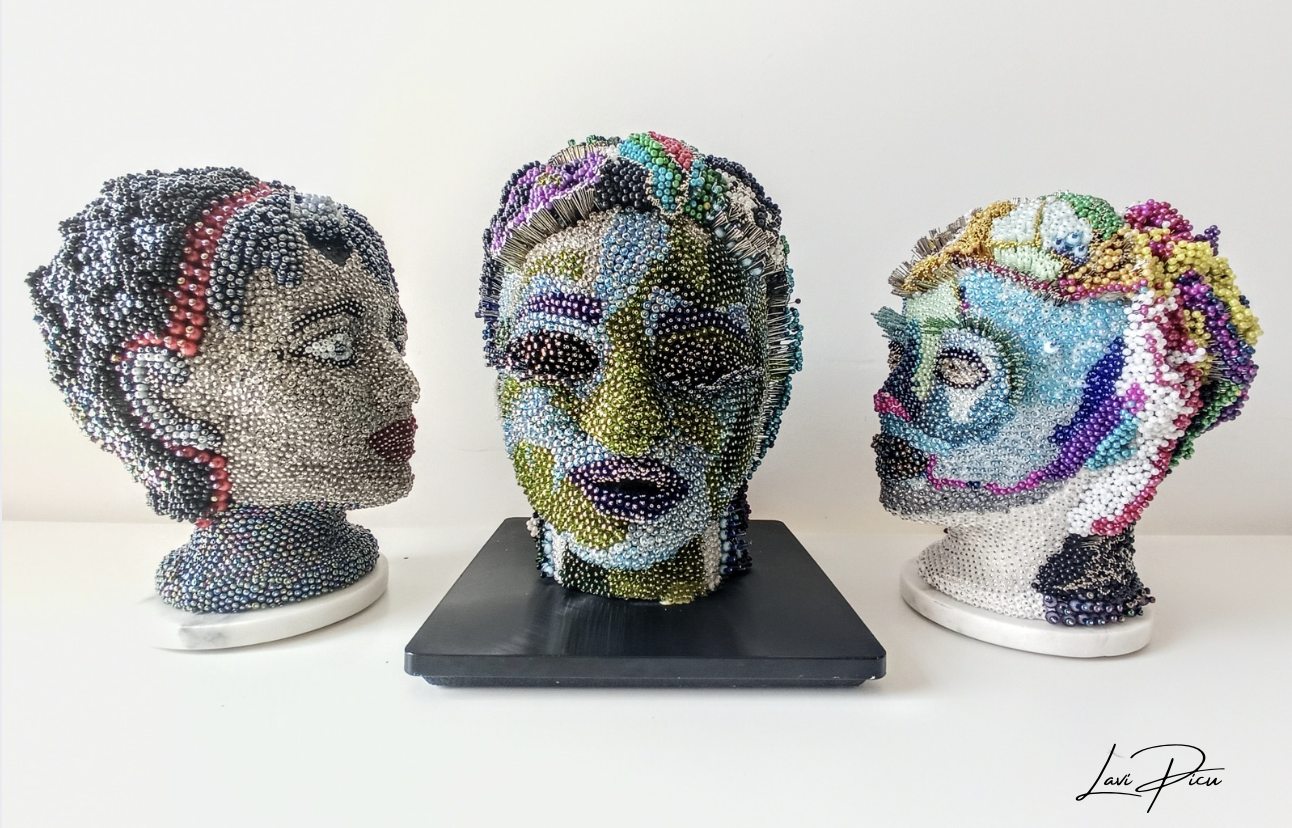
This approach is deeply connected to the spirit of art engagé. My goal is not to shock, but to foster empathy. When viewers encounter these sculptures, they are invited to step—if only for a moment—into the bodily experience of another person.
Engaged art, in this sense, is an act of bridge-building.
Beyond the Studio: Art and Community
For me, engagement does not stop at the artwork itself. It also involves conversation, education, and mediation.
I develop projects that invite audiences to reflect on themes of health, vulnerability, and resilience. Exhibitions become spaces for dialogue where people living with chronic illness can feel seen and understood. These events allow me to connect directly with communities who recognize their own stories in my work.
This social dimension is essential. Art engagé is most powerful when it creates relationships rather than monologues.
Why Art Engagé Matters Today
We live in a world saturated with images, yet many human experiences remain unseen. Invisible illness, mental health struggles, and chronic pain are still widely misunderstood. Engaged art has the ability to challenge that invisibility.
By addressing these subjects openly, art can:
Reduce stigma
Encourage empathy
Influence public perception
Create emotional connection where statistics fail
In this way, creativity becomes a form of quiet activism.
I do not believe that art must always provide answers. Sometimes its role is simply to ask better questions—or to insist that certain experiences deserve attention.
The Responsibility of the Artist
Choosing an engaged practice is also accepting a responsibility. It means being honest, vulnerable, and willing to occupy uncomfortable spaces. It requires listening as much as speaking.
As a multidisciplinary artist based in Montreal, my commitment is to continue creating work that reflects real human conditions rather than idealized images. Whether through sculpture, drawing, or collaborative projects, I want my art to serve as a meeting point between personal experience and collective awareness.
Art That Cares
Ultimately, art engagé is art that cares about the world it inhabits.
My practice grows from the belief that creativity can be both aesthetically powerful and socially meaningful. By transforming the language of pain into visual form, I hope to open conversations about chronic illness and to honor the resilience of those who live with it.
Engaged art does not change the world overnight. But it can change how we see one another—and that is where every real transformation begins.
Interested in learning more about my work? Explore my recent projects and exhibitions throughout the website, where art, empathy, and lived experience intersect.
Similar Articles

Explore Lavi Picu`s socially engaged art practice, where pain representation, emotion, invisibility, and creative engagement transform personal experience into visual language.