
Giving Form to the Unseen: Art, Lyme Disease, and Lupus
Giving Form to the Unseen Pain and Invisible Symptoms of Lyme and Lupus
My work exists at the intersection of art and lived experience. Living with Lyme disease and Lupus — two largely invisible illnesses — has shaped a practice rooted in material translation, conceptual rigor, and embodied testimony. Through sculpture, drawing, and mixed media, I give form to sensations that resist language: nerve pain, cognitive fog, inflammation, and altered perception. These works do not illustrate illness; they insist on its visibility, offering collectors and curators art that carries meaning, presence, and ethical depth.
There are illnesses that announce themselves visibly, leaving marks that invite recognition and care. And then there are illnesses whose most devastating symptoms unfold quietly, beneath the surface of the body, beyond immediate perception. Lyme disease and Lupus belong to this latter category — conditions defined as much by what cannot be seen as by what is endured.
Living with Lyme disease and Lupus means navigating a body that is simultaneously inflamed, hypersensitive, exhausted, and unreliable. Burning sensations without wounds. Cognitive fog that fractures language and memory. Altered perception, nerve pain, vertigo, and profound fatigue that erases entire days. These experiences are deeply real, yet persistently invisible.
My artistic practice exists at the intersection of art and lived experience. It is shaped not by abstraction alone, but by necessity. Art became the language I turned to when conventional language failed — when symptoms resisted explanation and when visibility became the condition for belief.
When the Body Becomes an Unreadable Text
Lyme disease is often understood as an acute illness with a clear beginning and end. For many, however, it evolves into a chronic, systemic condition marked by neurological, cognitive, and sensory symptoms that persist long after treatment. Lupus introduces an additional autoimmune dimension — a body that turns against itself, unpredictably and without visible warning.
The result is a body that becomes difficult to read, even to oneself. Fatigue that is not relieved by rest. Pain that migrates, intensifies, or changes character without explanation. Burning sensations beneath the skin — allodynia and paresthesia — that make even stillness feel aggressive. Brain fog that interrupts thought mid-sentence. Sleep that no longer restores. Anxiety and depression that arise not only from chemistry, but from prolonged disbelief and isolation.
In medical contexts, these experiences are often fragmented into symptoms. In social contexts, they are frequently minimized or psychologized. Without visible markers, the burden of proof shifts to the person who is already unwell. The body becomes an unreadable text, and the individual is left to translate an internal reality into a world unequipped to receive it.
The Added Complexity of Living With Lyme Disease and Lupus
Having Lyme disease and Lupus adds another layer to an already complex puzzle. Where Lyme disrupts the nervous system and sensory perception, Lupus introduces systemic inflammation, immune dysregulation, and flares that arrive without invitation. Symptoms overlap, amplify, and blur their origins. There is no singular narrative, no stable baseline, no clear causality.
Living at the intersection of these conditions means existing in a constant state of negotiation — between immunity and vulnerability, sensation and dissociation, presence and disappearance. The body becomes both battlefield and archive, holding multiple forms of damage that do not announce themselves outwardly.
Artistically, this dual reality informs the work in profound ways. It necessitates layering, accumulation, and tension. The work no longer speaks only of nerve pain or altered sensation, but of internal conflict — a body responding simultaneously to external invasion and internal attack. Surfaces become denser. Forms become more insistent. Fragility and resistance coexist within the same structure.
Art as Translation, Not Illustration
My work does not aim to illustrate illness in a literal or didactic way. It functions instead as translation — an attempt to give material presence to sensations that resist representation. Sculpture, drawing, and mixed media become tools for articulating what cannot be spoken.
Materials are chosen for their physical relationship to the body: pins, needles, glass beads, fluid accumulations, abrasive textures. These are not metaphors applied after the fact; they are extensions of sensation. Sharpness, density, repetition, and overload mirror lived experience. Each gesture is informed by how pain behaves — how it accumulates, migrates, intensifies, and refuses resolution.
The process itself mirrors chronic illness. It is slow, meticulous, physically demanding. It requires endurance rather than inspiration. Discomfort is not avoided but negotiated. In this sense, the studio becomes less a place of escape than a site of confrontation — where internal states are externalized and momentarily held.
Making the Invisible Visible — Without Simplifying It
There is a persistent expectation that art about illness should resolve into clarity or redemption. I resist this impulse. Lyme disease and Lupus are not linear. They fluctuate, contradict themselves, and resist closure. Any honest artistic language must allow for ambiguity, discomfort, and unresolved tension.
By giving form to invisible symptoms, the work does not claim to explain them fully. Instead, it insists on their existence. It asks the viewer to remain with density, abrasion, and sensory overload — to encounter surfaces that are demanding rather than decorative. In doing so, the work challenges the hierarchy of visibility that governs whose pain is believed and whose is dismissed.
This positions the practice within a lineage of conceptual and engaged art — art that does not simply occupy space, but carries ethical, political, and embodied weight.
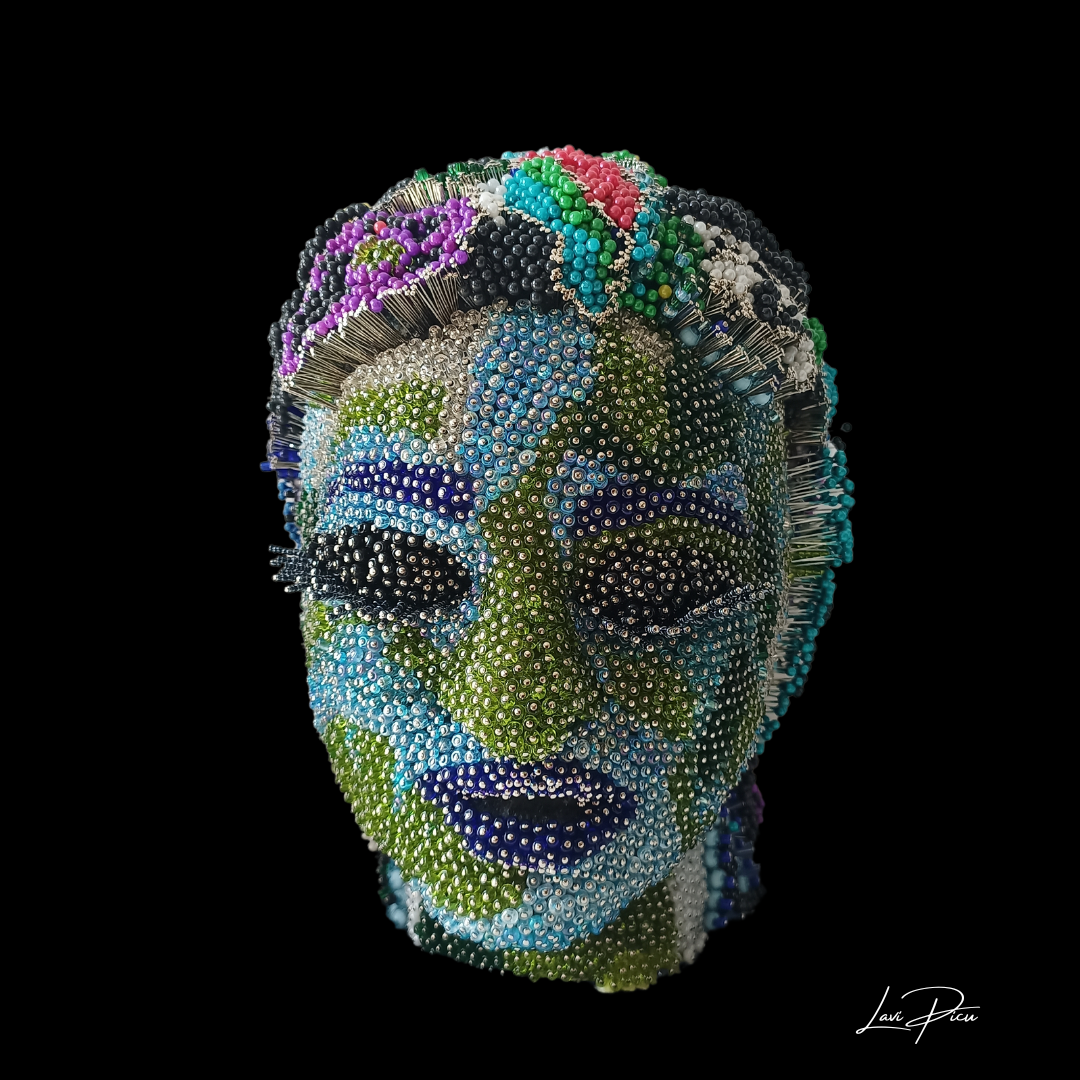
Allodynia - Mixed Media Sculpture
Testimony Embedded in Material
Each piece functions as a form of testimony. Not a narrative with a beginning and an end, but a record of an ongoing condition. A moment suspended within a body that is constantly changing.
For collectors, these works hold more than aesthetic presence. They carry lived experience. They preserve sensations that are otherwise fleeting, unshareable, and routinely invalidated. In the context of invisible illness, this matters deeply. When symptoms leave no visible trace, testimony is often dismissed as subjective. Art offers another register of truth — one rooted in materiality, labor, and endurance.
To collect such work is not simply to acquire an object, but to become a steward of a lived archive.
Sharing as an Extension of the Practice
This body of work is grounded in lived experience and conceptual intention. Each piece functions as a material testimony — preserving sensations and states that are otherwise fleeting, invisible, and routinely dismissed. Rather than representing illness narratively, the work translates internal realities into form through accumulation, tension, and material resistance.
For collectors, these works offer more than aesthetic value. They hold presence, labor, and endurance. They document a moment within an ongoing condition, situating the artwork as both object and witness. To collect this work is to steward a lived archive — one that engages questions of visibility, embodiment, and care within contemporary art discourse.
These works sit comfortably within collections focused on conceptual art, art engagé, and practices addressing the politics of the body, chronic illness, and unseen experience.
Insisting on Recognition
To create this work is to insist on recognition — not only of the art, but of the realities it embodies. It is a refusal to allow invisible symptoms to remain culturally invisible. A refusal to separate aesthetic practice from lived truth.
Art did not cure my illnesses. But it offered a way to live with them. It transformed internal experience into shared space, isolation into connection, sensation into form. It created a place where invisible pain could become visible — and, crucially, taken seriously.
That is where my practice continues to exist: at the intersection of art and lived experience, where meaning is not imposed, but endured, shaped, and shared.
To know more about my art, upcoming exhibitions, newly released collections, behind the scenes, flash sales, subscribe to my newsletter by clicking the button above “Join The Circle Of Collectors”!